Close the books. Forecast cash.
Run the close and maintain a 13-week cash forecast, reconciled to the general ledger and bank weekly. Agents update assumptions from actual activity; your team can review and override them.
For finance and accounting teams
In Project Falcon, FP&A saved about 1.5 hours per week per portfolio company. Results from one engagement. We build the close, cash forecasts, valuation models and reporting around your books, with scope and validation agreed for your firm.
A free, 20-minute conversation about one typical close for accounting and CAS firm owners. No access or purchase required; a one-page map within 48 hours on request.
About 1.5 hours per week per portfolio company, in one engagement.
See the FP&A resultsA person approves before anything posts.
Source code and accounts you control.
What we build
Choose the workflows your team needs for accounting and financial planning and analysis (FP&A). Each selected workflow and connection is scoped and validated for your firm. The first close and later FP&A work have their own agreed scope.
Run the close and maintain a 13-week cash forecast, reconciled to the general ledger and bank weekly. Agents update assumptions from actual activity; your team can review and override them.
Feed live general ledger data into three-statement and valuation models. Keep your team’s assumptions and use researched industry transaction comparables to inform monthly valuation tracking.
Generate financial statements, sponsor reporting packages and bank covenant schedules from closed actuals. Agree the formats, definitions and review requirements for each workflow.
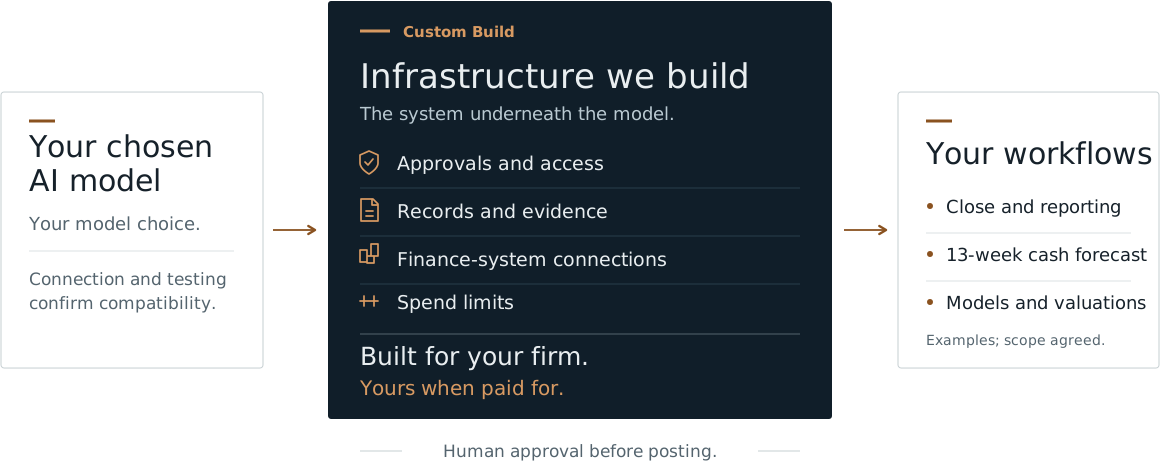
The controls hold across the work: AI prepares drafts, code checks calculations, and a named person approves anything posted to the books. Every connection is scoped, built and tested before live use.
Download the workflow diagramBuilt. Run. Checked.
In Project Falcon, FP&A saved about 1.5 hours per week per portfolio company. We built one finance and accounting platform for a private equity portfolio: the close, automated cash forecasts, live three-statement and valuation models, and financial and bank covenant reporting. Accounting also closed the books about 40% faster within 60 days.
Read the FP&A case studyThis is one engagement, not a promise for your firm. We look at your close, controls and baseline before a build starts.
From this engagement
About 1.5 hours per week per portfolio company.
About 40% faster within 60 days.
What was proposed, on what basis, who approved it and when.
Ways to work together
Build it yourself, build it with us, or have us build it for you. Each paid engagement stands on its own.
Free · 20 minutes · with Owen · for accounting and CAS firm owners
Trace one recurring close problem. A one-page map on request, sent within 48 hours. No access or purchase required.
$2,000 / once per firm
A self-guided finance and accounting platform your firm builds for itself. A guided planner, tested starter code and build guides give you the foundation.
Use your own compatible AI coding workspace to build and test selected workflows. Validate before live use. Perpetual licence to the supplied source; workspace, AI and hosting costs are separate. The full $2,000 credits against one Bootcamp seat.
$5,000 / four live weeks
The Sprint is included. Your team builds and tests one starter workflow on test data, with us in the room, then plans the next build.
A small group, a tested starter workflow, a handover and a next-build plan. Your firm validates the work before live use.
Scoped for your firm / four weeks
We build one month-end close that runs across your client books and move the first clients onto it. Week one is the read-only check-up and plan.
For firms with 15 or more client sets of books. Your firm owns the system we build when paid for. Background IP rights are set in the engagement. AI, hosting and optional support are separate.
Quoted for your firm / monthly
Base: we run the software in your own cloud account and look after sign-in access, APIs and connections. The accounts and bills stay in your name.
Plus adds 20 hours a month to build new features you request. Ongoing support is optional; your firm keeps the code and can choose who looks after it.
An extension of managed services.
No earlier Byram purchase required.
Work with us on what is still missing: controls, connections, testing and day-to-day use.
We scope the work around your team and the tools you already have. Priorities, responsibilities and fees are agreed before work starts.
The build: your firm owns what we build when it is paid for and keeps the source code. Our pre-existing tools and reusable components remain our background IP; your engagement sets out the rights to use them.
The Sprint: a perpetual licence lets your whole firm run, change and build on the supplied source. We retain its original copyright; you own your additions, data and outputs. No per-seat fee or licence renewal. Workspace subscriptions, AI usage and hosting are separate. Read the terms of sale.
Ownership does not by itself determine accounting treatment. Read the CapEx and OpEx FAQ.
We test a model against the work you actually run. Each cloud or local connection has to be built and tested before live use. Your firm holds the provider account and pays the AI and hosting bills. A change of model is a choice you control.
Who it’s for
Whether you close the books, forecast cash, maintain models or report to a sponsor, the figures need sources and review. We build around the work your team does for each client or portfolio company.
Coding, reconciliations and schedules, with separate preparation and approval for each client.
For accounting firmsCash forecasts, live models, valuation projections and reporting across your client books.
For fractional CFOsPortfolio cash forecasts, monthly valuations, sponsor reporting and bank covenant schedules.
For private equityA useful place to start
Free tools to work through one question about your firm. No email required to use them. Sharing a Diagnostic result with Owen is optional.
Who we are
Byram Advisory Group comes out of private equity and company finance. We built the planning systems. We ran month-end. We cut the hand work out of the calendar.

“Everyone builds the demo. Few build the part under it.”
Clean data. Keys kept where keys belong. A record of what happened that you can walk someone through. We build that part first, and teach it the same way.
We link the systems you use, automate the handoffs, and put what matters in one place. Quoted per job.
Books that must answer to a lender, investor or sponsor. For a firm, behind you under your name. For a finance team, beside you. Quoted per job.
Where to start
Bring one recurring problem to a free, 20-minute Close Teardown with Owen. We work through where it starts, what still needs your judgment and what is worth investigating next.
For accounting and CAS firm owners with a delivery team, typically serving 30–80 recurring clients. No access, passwords or installation. Ask for a one-page map on the call; Owen sends it within 48 hours.